The Christian Art Market: Faith, Fine Art & Selling with Integrity

From Cathedral Commissions to Collector Walls: A History of the Christian Art Market
Art rooted in faith has never existed outside support.
Long before galleries and online releases, Christian art was commissioned. Cathedrals, monasteries, and wealthy patrons funded frescoes, altarpieces, icons, and manuscripts as visual art was used to teach Biblical stories and reinforce theological belief in largely illiterate societies.
The Sistine Chapel ceiling did not appear out of thin air. Michelangelo was commissioned and funded to create it. Christian fine art was high end long before the modern art market existed.
Later, in the Dutch Republic, artists like Rembrandt painted Biblical scenes that were sold to private collectors. Faith moved from cathedral walls into homes. Christian art entered domestic spaces - not as decoration, but as presence.
The structure of the Christian art market has changed over centuries. Patronage evolved. Galleries emerged. Auctions formalised value.
But one thing has not changed: Art has always required support.

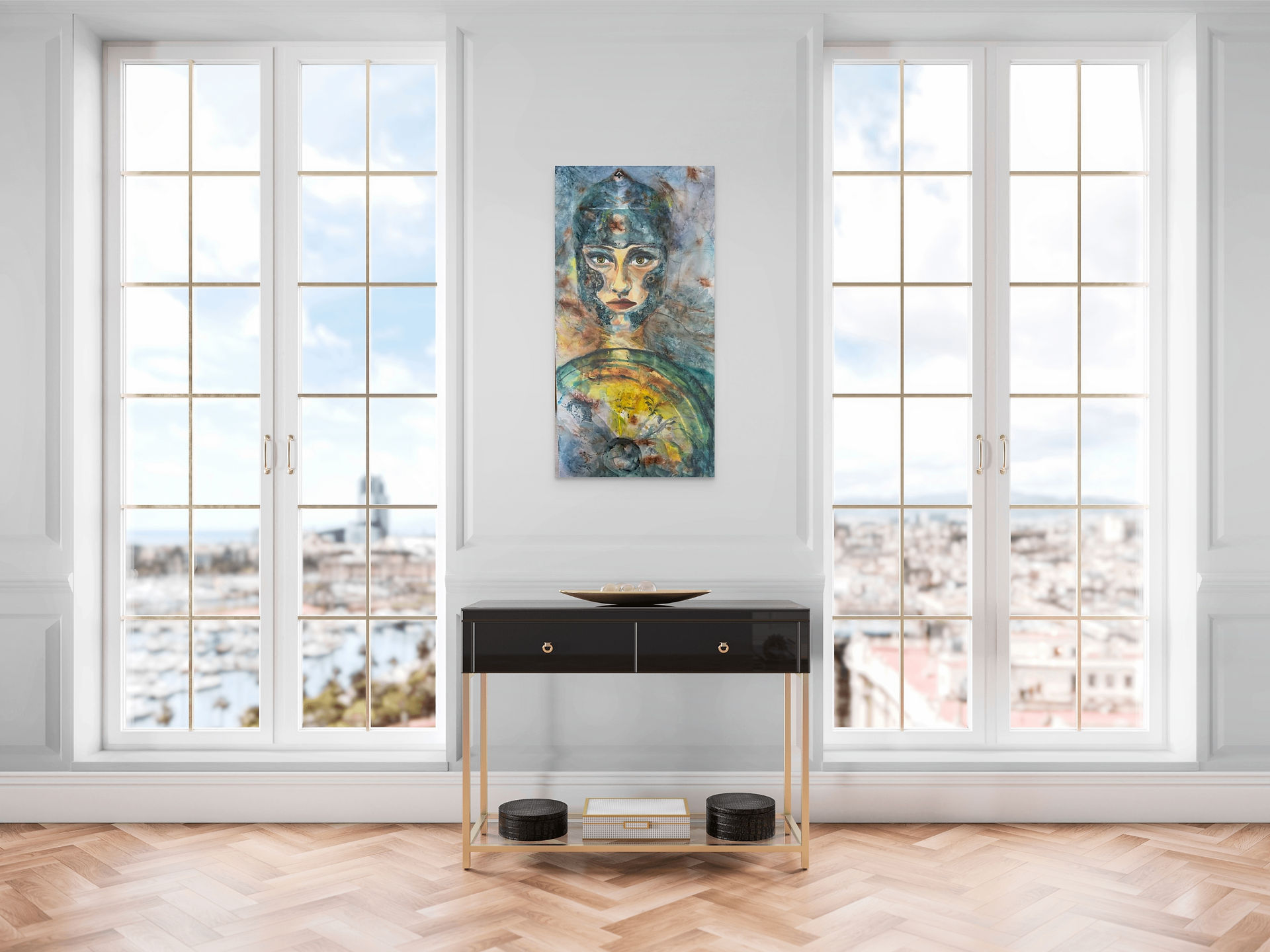
God and the Gallery: When Faith Meets the Art Market
I have felt discomfort around selling Christian art.
How do you put a price on something that comes from prayer, conviction, and belief? Does selling it reduce it?
History tells us otherwise.
Christian art has always been funded. It has always required materials, time, training, and support. The question has never been whether art should be sold. The question has been whether it remains anchored while it circulates.
When created with integrity and artistic excellence, faith-based art does not lose its message in the marketplace.
Instead, the marketplace becomes the channel through which that message travels further.
Faith and structure are not opposites. They are partners.
Why Christian Art Has Value - Artistically and Spiritually
Christian art adds something particular to a collector’s life.
It carries narrative, theology and hope in material form.
For faith-based art collectors, these works become more than visual statements. They become daily reminders. Anchors. Conversation starters. Witnesses on a wall.
But belief alone does not make strong art.
Christian fine art must stand on its artistic integrity - composition, scale, material, discipline, emotional weight. When craftsmanship and conviction meet, the work does not need to hide behind a label.
It stands on its own.
Collectors are not simply purchasing décor. They are choosing what shapes the atmosphere of their homes and what stories their walls will hold.


Why Paint “Christian” at All?
I have considered creating more “neutral” pieces and keeping faith-based work separate.
I could produce commercially appealing work for sale and reserve Christian paintings for personal expression.
But that would separate my work from its source.
Faith is not a subject I occasionally explore. It is the lens through which I see. To paint as though that lens does not exist would feel artificial. It would divide what, in my life, is not divided.
This does not mean every painting must illustrate a Bible verse. It does mean the undercurrent - the wrestling, the hope, the conviction - remains present.
Christian art is not a marketing category for me. It is coherence.
From Patronage to Studio Circle: How Christian Art Found New Markets
The patrons have changed.
Where once there were bishops and nobility, today there are individual collectors - people who choose to support art directly because they resonate with its message.
Artists no longer depend only on institutions. We can build direct relationships. We can release work intentionally. We can invite collectors into process, meaning, and structure.
A Studio Circle is a modern form of patronage. It is a way of saying: this work matters enough to build carefully. It deserves rhythm, sustainability, scale.
Christian art has always flourished when supported. If you believe art can carry light, then supporting it - following it - collecting it - is participation in that movement.
For those who want to follow new releases and engage with the thinking behind the work, the Studio Circle is where that happens.

Comments